History

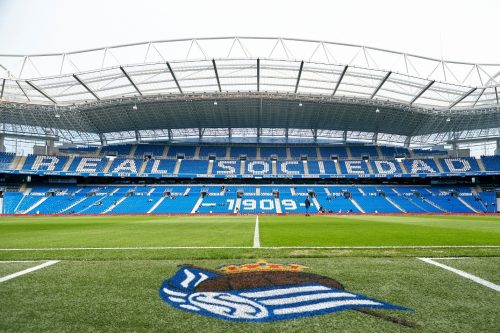
Real Sociedad in English, Erreala or Reala in Basque, La Real in Spanish, is a Spanish professional sports club in the city of Don ostia-San Sebastián, Basque Country, founded on 7 September 1909. It plays its home matches at the Anoeta Stadium.

Real Sociedad won the Liga title in 1980–81 and 1981–82, and finished runner-up in 1979–80, 1987–88, and 2002–03. The club has also won the Copa del Rey three times, in 1909, 1987, and 2020. It contests the Basque derby against rivals Athletic Bilbao. Real Sociedad was a founding member of La Liga in 1929; its longest spell in the top flight was for 40 seasons, from 1967 to 2007.[2]

Traditionally the club followed a policy (like that of its rival Athletic) of signing only Basque players, before signing Republic of Ireland forward John Aldridge in 1989. While a strong Basque contingent has been retained among its players, nowadays both non-Basque Spaniards and foreign players are represented at the club. Its youth section after the all-Basque era has still been very successful in developing internationally renowned players, such as World Cup winners Xabi Alonso and Antoine Griezmann.

The club has competed in the UEFA Champions League four times. In the 2013–14 season, the team finished 4th place in the group stage. In the 2003–04 season, the club progressed to the round of 16 before losing to Lyon. In the 1982–83 European Cup, its predecessor tournament, the team reached the semifinals, only to lose narrowly against Hamburger SV. In the 1981–82, the club lost in the first round against CSKA Sofia.

Aside from football (including a women’s team), Real Sociedad also has several sections in athletics, including track and field, field hockey, and Basque pelota.
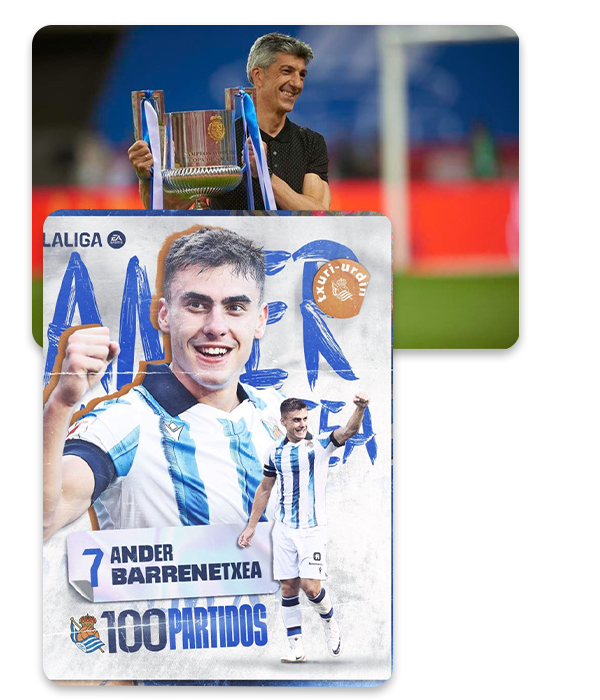
Background and structure

The Cantera of Spanish professional football club Real Sociedad is the organization’s youth academy, developing players from childhood through to the integration of the best prospects into the adult teams.

The final category within the youth structure is the Juvenil A (Basque: Gazteak A) under-18/19 team which represents the club in national competition. The successful graduates then usually move to the club’s reserve teams, Real Sociedad C or Real Sociedad B, which are also considered part of the Cantera due to being a stage in progression towards the senior team, albeit competing in the adult league system.

The academy is based at the club training complex, Zubieta, which is often the metonym used to refer to the system itself.

Picture3
Picture4

Real Sociedad Youth Development System

The Cantera of Spanish professional football club Real Sociedad is the organization’s youth academy, developing players from childhood through to the integration of the best prospects into the adult teams.

The final category within the youth structure is the Juvenil A under-18/19 team which represents the club in national competition. The successful graduates then usually move to the club’s reserve teams, Real Sociedad C or Real Sociedad B, which are also considered part of the Cantera due to being a stage in progression towards the senior team, albeit competing in the adult league system.

The academy is based at the club training complex, Zubieta, which is often the name used informally to refer to the system itself.

Real Sociedad Academy

They are the future of the Real. The lower categories of Real Sociedad are made up of eight teams. A training itinerary that ranges from the children’s category to the Sanse, where they learn to be people, beyond training as footballers who are proud to wear the txuri-urdin shirt.

Picture5
Picture6

Real Sociedad B

Real Sociedad de Fútbol B is a Spanish football team based in San Sebastián, in the autonomous community of Basque Country. Founded in 1951, it is the reserve team of Real Sociedad and plays in Segunda División B, holding home games at Campo José Luis Orbegozo holding 2,500 spectators.

Terms

Terms and Conditions

Privacy Policy

Cookie Policy

official partner of

Escudo RS

Follow Us